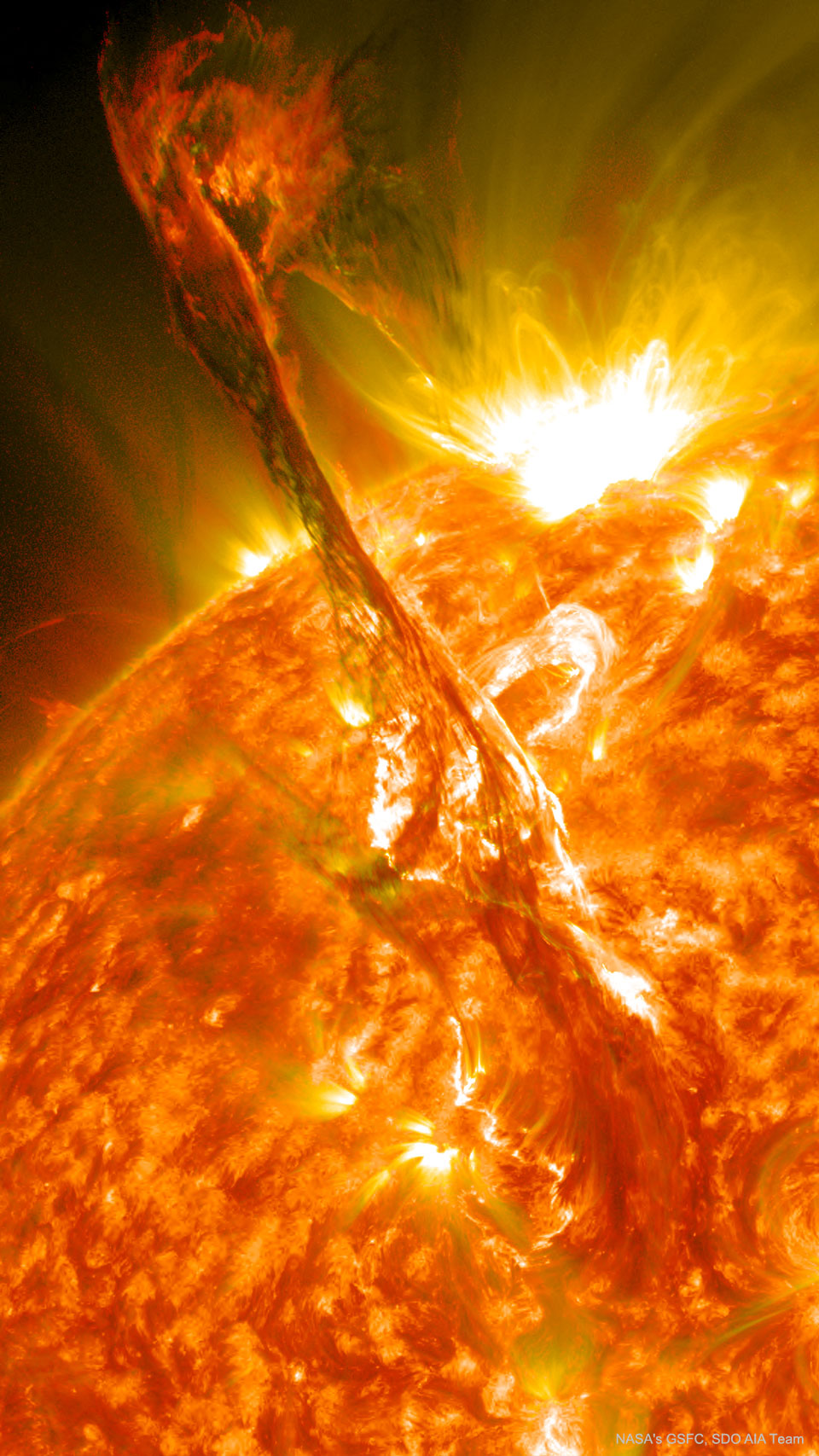
The Dream Everyone Understands
Fusion sounds like the perfect answer. The fuel can come from hydrogen isotopes. The energy density is enormous. The reaction that powers the Sun produces no carbon dioxide at the point of generation. So why are we not already running cities on fusion plants?
Because fusion is easy in stars and brutally hard in machines.
You Need a Tiny Star — But Not Too Tiny
To make fusion happen on Earth, light nuclei must get close enough for the strong nuclear force to overcome their electric repulsion. That requires extreme temperatures, turning the fuel into plasma. In common fusion approaches, plasma temperatures reach tens to hundreds of millions of degrees.
At that point, nothing can touch the plasma directly. It must be confined magnetically or compressed for brief instants by lasers or particle beams.
The Three Big Obstacles
First, the plasma is difficult to confine. Hot plasma wriggles, drifts and becomes unstable. Second, reactor materials suffer under intense neutron bombardment and heat loads. Third, even if you achieve impressive plasma performance, you still need the whole plant to produce more usable electrical energy than it consumes overall.
| Barrier | Why it matters | Engineering consequence |
|---|---|---|
| Plasma instability | Hot plasma wants to misbehave | Hard to sustain reactions continuously |
| Extreme temperatures | Reactor core conditions are extraordinary | Complex magnetic or inertial systems needed |
| Neutron damage | Materials get battered over time | Maintenance and lifetime become difficult |
| Fuel cycle issues | Tritium handling is nontrivial | Adds complexity and cost |
| Grid economics | Physics success is not enough | Whole plant must become commercially viable |
What About “Net Energy” Headlines?
Headlines can be misleading. A fusion experiment may produce more energy from the fusion event than the laser energy directly delivered to the target, for example, yet still fall far short of practical electric-power generation once the full system is counted. This is why experts distinguish between scientific milestones and commercial power plants.
Magnetic Confinement vs Inertial Confinement
Tokamaks and stellarators aim to confine plasma magnetically for longer periods. Inertial-confinement systems compress small fuel pellets rapidly to trigger fusion briefly. Both approaches are scientifically fascinating. Neither has yet matured into routine, economical grid electricity.
So Will Fusion Ever Work?
Probably, in some form. The field has made real progress, and it would be a mistake to dismiss that. But it would also be a mistake to confuse “promising” with “ready.” Fusion is still a frontier technology, not a plug-and-play energy source.
The honest answer is that fusion power is not impossible. It is simply one of the hardest machines humanity has ever tried to build.